
Outpatient removal of varicose veins
Radiofrequency Ablation
It is one of the most modern methods of treating varicose veins. The procedure is minimally painful, takes up to an hour, and patients can return to everyday life almost immediately.
Procedure overview
Radiofrequency ablation is suitable for patients with varicose veins, especially in cases where larger veins are damaged and cause symptoms such as pain, swelling, or a risk of complications, for example thrombosis.
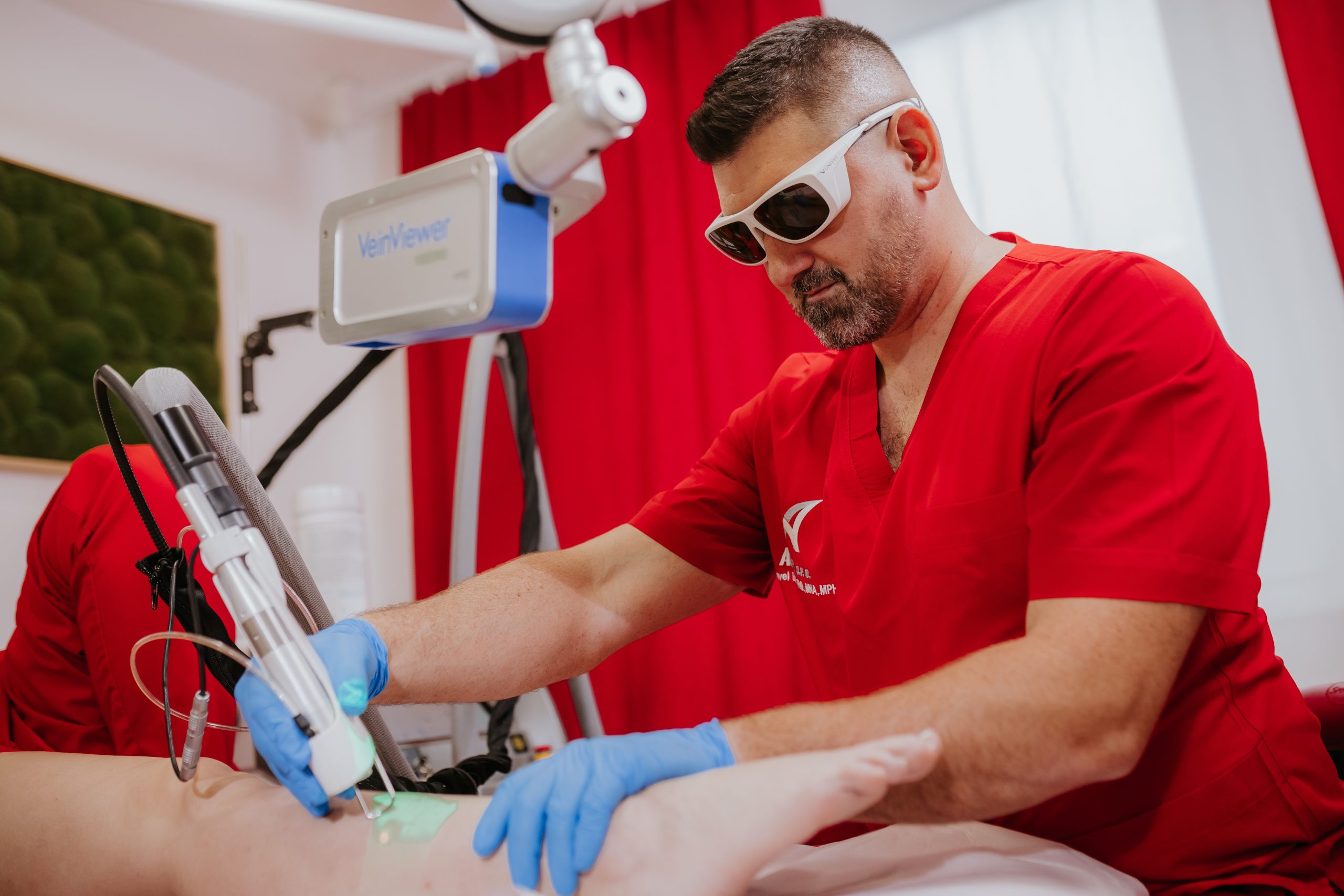
Radiofrequency vein treatment
- It is one of the most modern methods of treating varicose veins.
- The method is minimally painful, takes up to an hour, and the patient’s return to everyday life is almost immediate.
- The procedure is performed using radiofrequency, whose thermal energy allows the weakened vein wall to contract.
- It is suitable for patients with varicose veins, especially in cases where larger veins are damaged and cause symptoms such as pain, swelling, or a risk of complications.
Up to 60 minutes
Minimally painful
No hospital stay
Quick return home
How the procedure works
Radiofrequency ablation is targeted and gentle. During the procedure, the affected vein is gradually closed, and in most cases patients tolerate the treatment very well.
Insertion of the radiofrequency catheter:
The procedure is performed by inserting a radiofrequency catheter through an introducer into the affected vein. Along an approximately 7 cm segment, a working temperature of about 120°C is generated.
Gradual closure of the vein:
This method leads to gradual, segmental closure of the affected vein.
Protection of surrounding tissues:
A cold saline solution mixed with anesthetic is injected around the venous trunk; it cools the vein and prevents thermal injury to the surrounding tissues. The anesthetic in the solution prevents pain.
Gentle procedure and quick recovery:
The procedure is gentle and safe and patients tolerate it well. Hematomas do not occur, the patient does not feel pain, and can return to normal activities in a short time.
Examples of results
Before-and-after photographs help illustrate the change in the appearance and condition of the lower limbs after radiofrequency ablation. The result depends on the extent of venous involvement as well as the individual healing process.
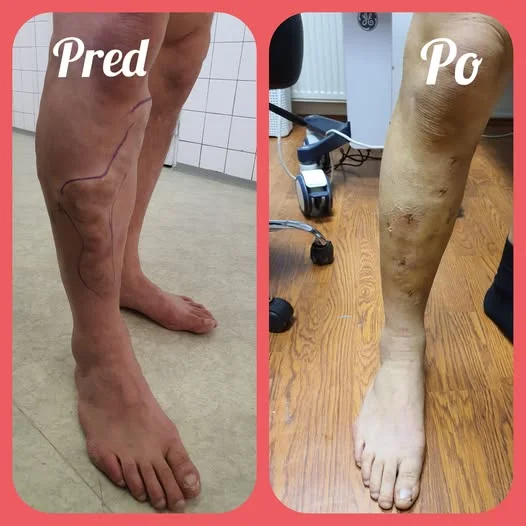
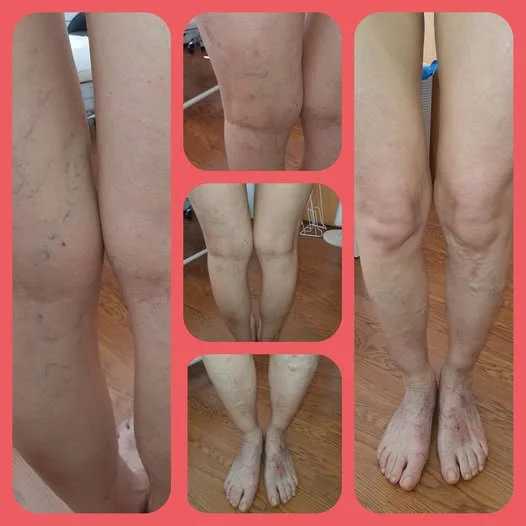
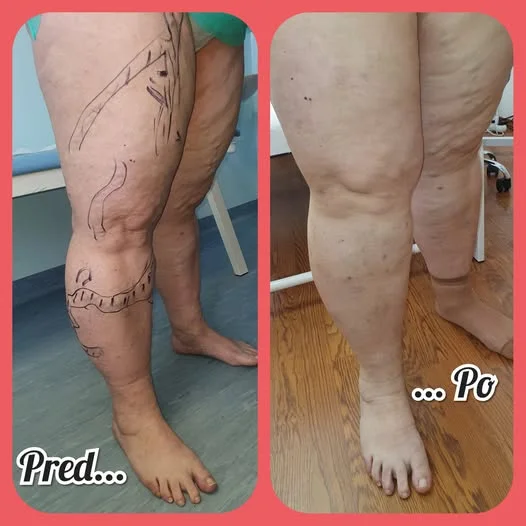
Before and after the procedure
Before the procedure itself, an expert examination of the venous system is required, and after the treatment it is recommended to follow lifestyle measures that support healing and the proper treatment outcome.
Before the procedure
- Before radiofrequency ablation surgery for varicose veins, the doctor will determine what problems your varicose veins are causing, examine your venous system and assess the extent of the damage.
- The highest-quality examination is an ultrasound scan, through which the doctor identifies non-functioning venous segments where reflux has been detected.
- Afterwards, the doctor will inform you about the scope of the possible procedure. Patients at our vascular surgery clinic are operated on in a day-surgery setting. After 1 to 2 hours, the patient goes home.
After the procedure
- After radiofrequency ablation, wearing compression stockings is recommended, as they help speed up recovery and support circulation.
- Patients may experience mild tenderness or bruising at the treatment site, which usually subsides quickly.
Interested in radiofrequency ablation?
Book a consultation appointment and find out whether radiofrequency ablation is the right solution for you.
Write to us
Do you have a question or would you like to book an appointment? Leave us a message and we will get back to you as soon as possible.
Contact
AdNa s.r.o., Vascular Surgery Outpatient Clinic
Krivá 17, 040 01 Košice
Mon–Fri, 7:00 am – 3:30 pm
We reply within 24 hours
Contracted insurance companies